
Dental Implants in Cordova, TN
A missing tooth changes how you chew, how you talk, and over time how the rest of your teeth sit in your mouth. Dr. Dalal walks you through whether an implant is the right fix, what the process looks like, and what it will cost before any work begins.
A Calm, Step-by-Step Approach to Dental Implants
If you have been quietly avoiding one side of your mouth when you eat, or you have lived with a gap for longer than you meant to, dental implants in Cordova TN are worth a real conversation. An implant replaces the root of the tooth with a small titanium post, and then a custom crown sits on top. Done well, it looks and functions like the tooth that used to be there.
Dr. Dalal Abdulkarim places her recommendations on what she actually sees on your scan, not on a sales script. She trained at the University of Tennessee College of Dentistry and has practiced across urban Memphis and rural East Tennessee, which means she has seen a wide range of cases: a single front tooth lost to a fall, a back molar cracked years ago and never replaced, a patient who has been wearing a partial they never liked.
The point of this page is to give you the why behind implants, not just the what. By the time you walk in, you should already have a sense of what to expect, what your options are, and roughly where the cost lands. If an implant is not the right call for your situation, she will tell you that too.
How a Dental Implant Replaces a Missing Tooth
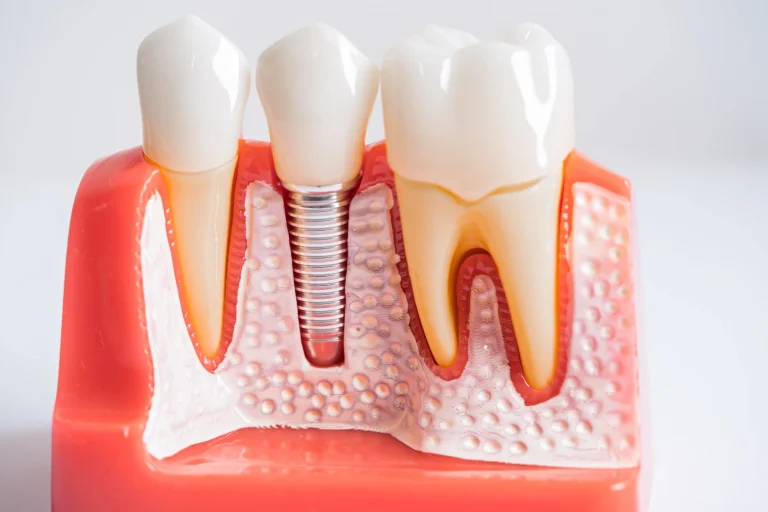
A dental implant has three parts. The implant itself is a small titanium post that takes the place of the tooth root. The abutment is a connector that sits at the gumline. The crown is the visible tooth on top, shaped and shaded to match the teeth next to it.
Before anything is placed, we take a CBCT 3D scan of your jaw. That scan shows the bone height, the bone density, and the location of nerves and sinuses in detail. Dr. Dalal uses it to plan exactly where the implant should sit. If the bone is thinner than it needs to be, she will talk with you about bone grafting first, rather than placing an implant into a site that will not hold it well.
Placement itself is a single appointment under local anesthesia. Most patients describe it as more comfortable than they expected. The post then needs time to integrate with the bone, usually three to six months, before the final crown is attached. During that healing window you will have a temporary in place so you are not walking around with a gap.
Once integration is confirmed, we use our intraoral scanner to capture a digital impression for the crown. No tray of impression material, no waiting on a lab to ship a model back. The crown is designed from that scan and seated when it is ready.
Who Is a Good Candidate for an Implant
Most healthy adults with a missing tooth or a tooth that needs to come out are candidates for an implant. The two things that matter most are bone volume at the site and the health of the surrounding gums. If you have been missing a tooth for years, the bone in that area may have shrunk, and we will want to look at whether grafting needs to happen first.
Certain conditions change the conversation. Uncontrolled diabetes, heavy smoking, and a history of significant gum disease all affect how well an implant integrates. None of those are automatic disqualifiers, but they shape the plan. If you have active gum disease, we treat that first. There is no point in placing an implant into a mouth that has not been stabilized.
Age, on its own, is rarely the issue. Dr. Dalal has restored implants for patients in their seventies and eighties who wanted to eat normally again, and for younger patients who lost a tooth to a sports injury. What matters is the bone, the gums, and your day-to-day hygiene. We will go through all of that at the consult and show you what we see on the scan.
What Your Implant Treatment Includes at Cordova Family Dental
Your first visit is an evaluation, not a hard sell. We take digital X-rays, a CBCT scan, and intraoral photos, and Dr. Dalal walks you through what she sees on screen. If an implant makes sense, you leave with a written plan that lists every step, every appointment, and the cost of each piece.
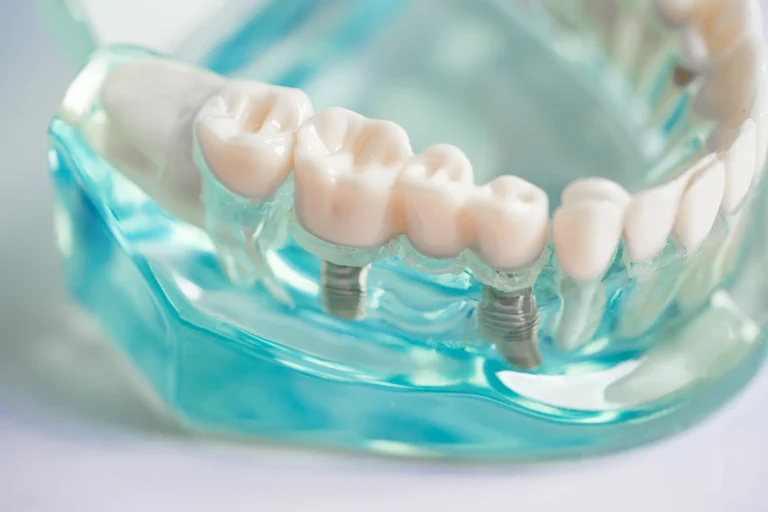
From there, a typical case includes: any preparatory work such as an extraction or a bone graft, surgical placement of the implant, a healing period with a temporary, the digital scan and design of your crown, and the final seating. If multiple teeth are involved, or if you are considering an implant-supported denture, the plan is built around that specifically.
We handle the restoration side in-house. Dr. Dalal places and restores single-tooth implants and works with referral partners for more complex surgical cases when that is the right call. You are not bounced between three offices that do not talk to each other. If you want a deeper look at the math, our implant restoration cost page lays out what a single tooth case generally runs and what factors move the number.
Throughout the process, we keep things plain-language. Before we start any step, you will know what is happening, why it is happening, and how long it should take to heal.
Paying for an Implant: Insurance, TennCare, and Financing
Implants are usually billed in pieces: the surgical placement, the abutment, the crown, and any preparatory work like grafting or an extraction. Many PPO dental plans cover part of the restorative portion (the crown) even when they do not cover the surgical placement, so the out-of-pocket number is rarely as steep as a single sticker price suggests. We are in-network with most PPO plans common to Memphis-area employers and we now accept TennCare as well. Coverage for implants under TennCare is limited, but we will tell you exactly what is and is not covered before any work is scheduled.
For the portion that is not covered, CareCredit financing is available and lets you spread the cost over months rather than paying it all at once. We will run your benefits before the consult ends and give you a written estimate that separates the insurance portion from your share. No surprises at checkout.
If the number is more than works for your budget right now, that is a normal conversation to have. Sometimes the right answer is to start with the extraction and graft, let the site heal, and place the implant later in the year when benefits reset. Dr. Dalal will help you sequence the plan in a way that fits your mouth and your budget.
Why Replacing a Missing Tooth Matters Long-Term
When a tooth is missing, the bone underneath begins to resorb. The teeth on either side drift toward the gap, and the tooth above or below it can start to over-erupt because nothing is meeting it when you bite. A year or two of that adds up, and what started as one missing tooth becomes a bite problem that affects several teeth.
An implant stops that cascade. The titanium post stimulates the bone the way a natural root would, the neighboring teeth stay where they belong, and your bite stays balanced. With routine cleanings and good home care, implants are designed to last for decades.
If you have been weighing your options, the next step is a conversation, not a commitment. Come in, let us look at the scan together, and you can decide from there. We also see plenty of patients who eventually choose dentures or a bridge instead, and that is a fine outc-webpome too when the situation calls for it.
Find Out if an Implant Is the Right Fit
Schedule a consult with Dr. Dalal and we will review your scan together, lay out your options, and give you a written estimate before you leave. No pressure, no surprises.