
Periodontal Maintenance in Cordova, TN
Once gum disease has been treated, the work shifts to keeping it from coming back. Periodontal maintenance is the recurring visit that holds that ground for you.

What Periodontal Maintenance Actually Does
Periodontal Maintenance in Cordova TN is the follow-up care that happens after gum disease has been treated, usually with a deep cleaning like scaling and root planing. It is not the same as a six-month cleaning, and Dr. Dalal will be the first to explain the difference. Once the gums have been infected and the bone around the teeth has started to pull away, the mouth needs a different kind of upkeep on a tighter schedule.
The goal is straightforward. Keep bacteria from settling back into the pockets around your teeth. Catch any early signs of inflammation before they turn into bone loss again. Give your gums a steady, predictable rhythm of cleaning so the work that was already done does not unravel.
Most of our maintenance patients come in every three to four months instead of every six. That cadence is not arbitrary. It tracks how quickly the bacteria that cause gum disease repopulate below the gumline once a pocket has formed. We will walk you through why your interval is what it is, and we will show you on your own X-rays and pocket measurements what we are tracking.
How Periodontal Maintenance Differs from a Regular Cleaning
A standard cleaning, sometimes called a prophylaxis, is for a mouth that has healthy gums and no history of bone loss. The hygienist removes plaque and tartar from above and just below the gumline, polishes the teeth, and sends you on your way. It is preventive in the truest sense, keeping a healthy mouth healthy.
Periodontal maintenance is different work on a different mouth. After scaling and root planing, the pockets between your gums and teeth are deeper than they should be, even when the infection is under control. Bacteria can hide further down the root surface, and tartar tends to form in places a regular cleaning would not reach. So we go deeper. We measure the pockets at every visit, we clean below the gumline around each tooth, and we compare today’s numbers to your last set.
The visit usually takes a little longer than a routine cleaning, and you may have some areas numbed if a pocket is particularly tender. Dr. Dalal will look at your gum tissue, your bite, and the bone levels on your X-rays. If something has shifted, we talk about it before you leave the chair, not in a letter weeks later.
Who Needs Periodontal Maintenance and How Often
If you have been diagnosed with periodontitis at any stage, or if you have completed a course of scaling and root planing, you are a candidate for ongoing maintenance. That includes patients who came to us with bleeding gums and deep pockets, patients who had not seen a dentist in years and finally walked back in, and patients whose previous dentist mentioned gum disease but never quite explained what to do about it.
Three months is the most common interval. Some patients hold steady at four months once their tissue has stabilized over a year or two. A smaller group needs to come in more often, especially if they smoke, have diabetes, or are on medications that affect the gums. The interval is a clinical decision based on pocket depths, bleeding points, and how your tissue actually looks, not a flat policy.
We will not move you back to a regular six-month cleaning just because the gums look better at one visit. Periodontal disease is a chronic condition, similar to how high blood pressure does not go away because one reading was normal. The maintenance schedule is what keeps it managed. If your gums stay healthy for a long stretch, we are happy about that, and we keep watching.
What Happens at Your Periodontal Maintenance Visit
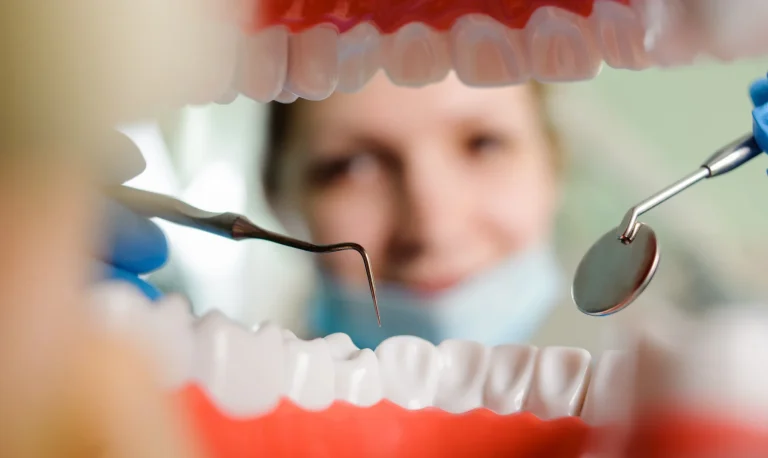
Every maintenance appointment at Cordova Family Dental follows a predictable pattern, which makes it easier to spot changes. We start by reviewing your health history and any medications, because both can affect gum tissue. Then the hygienist measures the pocket depth around each tooth and notes which sites bleed on probing. Those numbers go into your chart so we can track them visit over visit.
From there, the cleaning itself happens. We remove tartar and bacterial buildup from above and below the gumline, using hand instruments and ultrasonic tools depending on what each area needs. We polish the teeth, smooth any rough root surfaces if needed, and check the fit of any crowns, bridges, or restorations along the gumline. If digital X-rays are due, we take them and read them with OverJet AI assistance so small changes in bone level do not get missed.
Dr. Dalal does an exam at the end, including an oral cancer screening, and reviews everything with you. If a tooth is starting to shift, if a filling is wearing down, if a spot looks like it needs watching, you will hear about it then. We will show you the photo or the measurement we are looking at, and we will tell you what we recommend doing about it, or not doing about it. Sometimes watching and waiting is the right call.
Insurance and Out-of-Pocket Costs for Periodontal Maintenance
Most PPO dental plans cover periodontal maintenance, often at the same percentage as a regular cleaning, but with some important differences. Many plans cap how many maintenance visits they will cover per year, usually at two or four. If your clinical interval is three months, that math sometimes leaves one visit per year as an out-of-pocket expense. We will run your benefits before your appointment and tell you what to expect.
We accept TennCare as well as most PPO dental plans used by Memphis-area employers. If you are not sure whether your plan covers maintenance after scaling and root planing, call us and we will check. For balances that are not covered, CareCredit financing is available so the cost can be spread across the year rather than paid all at once.
Our approach to billing is the same as our approach to treatment. No surprises. If a visit is going to cost you something out of pocket, you hear the number before we start, not after.

Why Staying on a Maintenance Schedule Protects Your Teeth
Gum disease is the leading cause of tooth loss in adults, and most of that loss happens slowly, in patients who stopped showing up for cleanings after the deep work was done. The teeth feel fine. The gums look okay in the mirror. And then a tooth gets loose, or an X-ray shows bone loss that was not there two years ago. Maintenance visits are how that quiet progression gets caught early.
There is also a connection between gum health and the rest of your body that we take seriously. Inflammation in the gums is linked to heart disease, poorly controlled diabetes, and complications during pregnancy. Keeping the gums calm is not just about saving teeth, although that alone would be worth it.
Patients who stay on a steady maintenance interval tend to keep their natural teeth longer, spend less on emergency restorative work, and avoid the cycle of repeated deep cleanings. That is the practical case for showing up every three or four months. It is cheaper, simpler, and easier on you than the alternative.
Ready to Get Back on a Maintenance Schedule
If you have had a deep cleaning before, or if it has been a while since anyone measured your gums, give us a call. We will look at where things stand and build a maintenance plan that fits your mouth and your budget.