
Root Canal Treatment in Cordova, TN
When a tooth is infected or the nerve inside it is inflamed, a root canal lets us save the tooth instead of pulling it. Dr. Dalal walks you through the X-ray, the diagnosis, and the plan before any instrument touches your mouth.
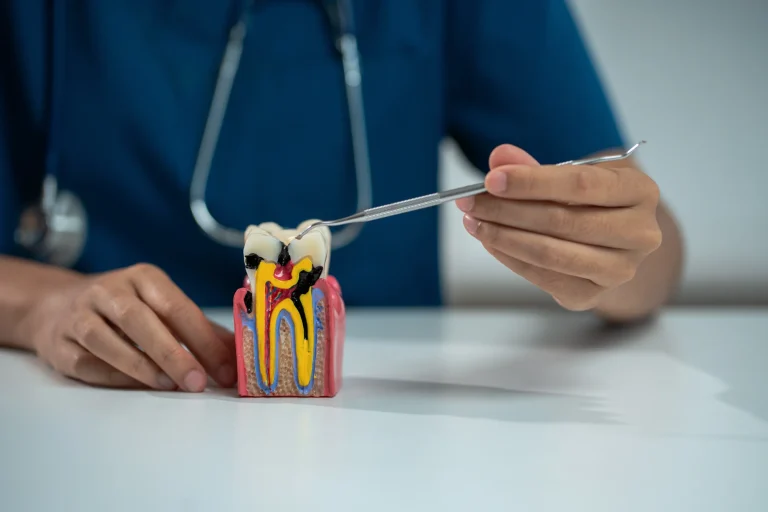
What a Root Canal Actually Does for a Painful Tooth
Root Canal Treatment in Cordova TN is one of those procedures patients dread because of stories they have heard, not because of what the appointment is actually like. The real job of a root canal is straightforward: clean the infected or inflamed tissue out of the inside of a tooth, seal it back up, and let you keep the tooth you already have. With modern anesthesia and the imaging we use at Cordova Family Dental, most patients tell us afterward that it felt similar to getting a filling, just longer.
Dr. Dalal Abdulkarim trained at the University of Tennessee College of Dentistry and has treated patients from urban Memphis to rural Kingsport and Union City. That range matters here, because root canals come up in every kind of practice. A cracked molar from a Tuesday afternoon snack, a deep cavity that finally reached the nerve, a tooth that has been bothering you off and on for months: these are the situations where saving the tooth almost always beats losing it.
Before we start, we will show you the digital X-ray, point out what we are seeing, and explain why a root canal is the recommendation instead of an extraction or a watch-and-wait approach. The point is that you leave understanding the why, not just the what.
How Dr. Dalal Performs a Root Canal at Cordova Family Dental
A root canal is done in a few clear steps. We numb the tooth and the surrounding area thoroughly, then place a small protective barrier around it to keep the work area clean and dry. Dr. Dalal makes a small opening in the top of the tooth to reach the canals inside, removes the inflamed or infected nerve tissue, and shapes the canals so they can be sealed.
Once the inside of the tooth is clean, we fill the canals with a biocompatible material called gutta-percha and close the opening with a temporary or permanent filling. Most molars and many premolars need a crown afterward, because a tooth that has had a root canal is more brittle and benefits from full coverage. We use an intraoral scanner for the crown impression, which means no tray of traditional impression material sitting in your mouth.
Some teeth can be treated in a single visit. Others, especially molars with curved canals or stubborn infection, are better done across two appointments so the tooth can settle between steps. Dr. Dalal will tell you which path makes sense for your specific tooth before we begin, not halfway through.
Signs You May Need a Root Canal Instead of a Filling
Not every toothache means a root canal. Sometimes it is a cavity that a filling can still handle, sometimes it is a cracked filling, sometimes it is gum-related. The reason imaging matters so much is that the symptoms overlap. We read every X-ray with OverJet AI assistance alongside Dr. Dalal’s own eyes, and when a tooth is questionable we will often take a CBCT 3D image to look at the roots from angles a standard X-ray cannot show.
The classic signs that the nerve inside a tooth is involved: lingering sensitivity to hot or cold that does not fade after a few seconds, pain when you bite down on that specific tooth, a dull throb that wakes you up at night, swelling or a small bump on the gum near the root, or a tooth that has darkened compared to its neighbors. Any one of these on its own is worth a look. Two or more together usually points toward endodontic treatment.
If you have a tooth that has been bothering you for a while and you have been hoping it would settle down on its own, please come in. Infections inside a tooth do not heal themselves, and catching one earlier almost always means a simpler appointment and a better long-term outc.webpome for the tooth.
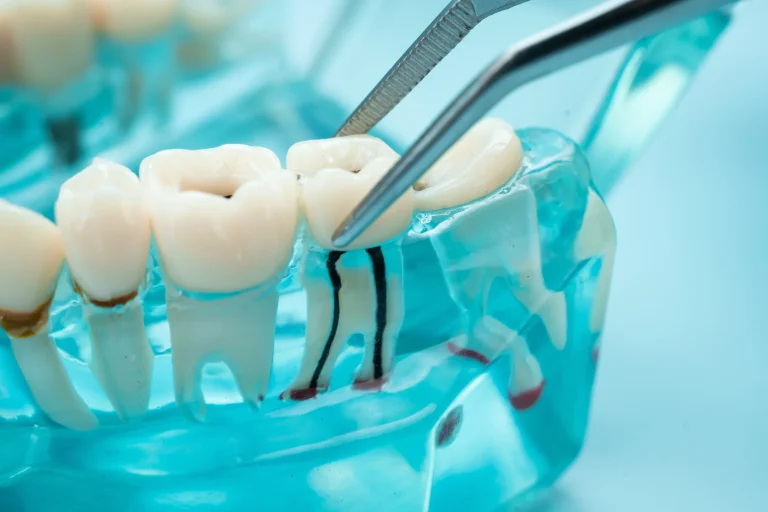
What's Included in Your Root Canal Visit
Every root canal appointment at our Cordova office includes a few things you can count on. We start with updated digital X-rays and, when needed, a CBCT scan, so we are working from a clear picture of the roots and the bone around them. Dr. Dalal will sit down with you, pull the images up on the screen, and walk through what she is seeing in plain language before any treatment begins.
During the procedure itself, you get thorough local anesthesia, a calm pace, and breaks whenever you need one. We will check in with you as we go. After we finish, we send you home with clear instructions on what to eat, what to avoid, and what to expect for the next few days. Most patients are sore for a day or two and then back to normal.
If the tooth needs a crown to finish the restoration, we use our intraoral scanner to capture the impression digitally. You can read more about that step on our page for crowns and bridges in Cordova TN, and you can learn about the imaging tools we use on our dental technology in Cordova TN page.
Insurance, TennCare, and Paying for Root Canal Treatment
Root canals are usually covered, at least partially, by PPO dental plans and by TennCare. Cordova Family Dental is in-network with most PPO plans used by Memphis-area employers, and we are now accepting TennCare. Before we start, our front desk will run your benefits, explain what your plan covers for endodontic treatment and the crown that often follows, and give you an out-of-pocket estimate in writing.
If there is a balance after insurance, or if you do not have dental coverage right now, we offer CareCredit financing so the cost can be spread out instead of paid all at once. You can look at our payment options in Cordova TN ahead of time so you know what is available before you sit in the chair.
We treat the money conversation as a normal part of the visit, not an awkward add-on. If the numbers do not fit your budget this month, tell us. Sometimes the right answer is a temporary measure now and the full root canal in a few weeks, and that is a conversation worth having out loud.

Why Saving Your Natural Tooth With a Root Canal Is Worth It
A root canal lets you keep your own tooth. That matters more than it sounds like it does. Natural teeth keep the bone in your jaw stimulated, they keep your bite aligned, and they do not require the surgical steps and healing time that come with replacing a missing tooth. With proper care, a tooth that has had a root canal and a well-fitted crown can last for decades.
The alternative to a root canal is usually an extraction followed by a decision about replacement: a bridge, an implant, or living with the gap. Each of those options has its place, and we offer them all. But when the tooth can be saved cleanly, saving it is almost always the simpler and less expensive path over the long run.
If you are weighing your options, Dr. Dalal will lay them out side by side. You can also read more about our broader endodontics in Cordova TN approach, or, if extraction ends up being the right call, our page on tooth extractions in Cordova TN explains what that path looks like.
Have a Tooth That Has Been Bothering You?
Call Cordova Family Dental and we will get you in for an exam, an X-ray, and a straight answer about whether a root canal is the right next step. No pressure, no jargon.