
Tooth Extractions in Cordova, TN
When a tooth cannot be saved, the next step is making the removal calm, clear, and as easy on you as possible. Dr. Dalal walks you through the reason for the extraction, what the visit looks like, and what comes next.
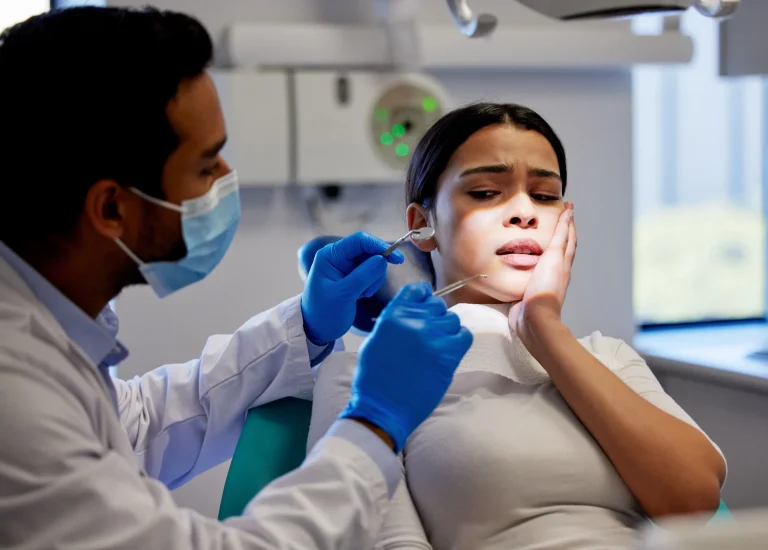
A Calm, Plain-Language Approach to Tooth Extractions
Most people do not arrive at Cordova Family Dental hoping to talk about tooth extractions in Cordova TN. They arrive because something has been bothering them for a while, or because a back molar finally cracked on a Tuesday afternoon, or because a wisdom tooth has started to push on everything around it. Whatever brought you in, the goal is the same: figure out whether the tooth can be saved, and if it cannot, take it out in a way that protects the rest of your mouth.
Dr. Dalal Abdulkarim trained at the University of Tennessee College of Dentistry and has practiced from urban Memphis to rural East Tennessee. She has removed teeth for teenagers getting ready for braces, for grandparents who finally said enough, and for plenty of people in between. The tone of the appointment does not change much. We will show you the X-ray, explain what we are seeing, and only move forward once you understand the why.
An extraction is a small surgical procedure, but for most patients it is also a relief. A tooth that has been hurting for weeks stops hurting. A crowded mouth gets the room it needs. A failing tooth gets replaced with something that works. The visit itself is usually shorter and calmer than people expect.
When a Tooth Actually Needs to Come Out
Not every painful tooth needs to be extracted. Before we recommend removal, Dr. Dalal looks at the full picture using digital X-rays and, when the situation calls for it, CBCT 3D imaging. OverJet AI assists with reading the X-rays, which gives us a second set of eyes on decay, bone levels, and root structure. The point is to make sure an extraction is the right call, not the easy one.
There are a handful of situations where removal is genuinely the better path. Advanced decay that has destroyed too much of the tooth to support a crown or a root canal. A tooth that has cracked below the gum line. Severe gum disease that has loosened the tooth from its bone. Wisdom teeth that are impacted or pushing against the molars in front of them. Baby teeth that refuse to fall out on their own and are blocking the adult tooth underneath. Crowding that needs to be resolved before orthodontic treatment can move teeth into a better position.
If the tooth can be saved, we will say so. A root canal, a crown, or periodontal treatment may keep your natural tooth in place for years. When those options have run out, or when the tooth is causing problems for the teeth around it, extraction becomes the most predictable way forward.
What a Tooth Extraction Visit Looks Like at Cordova Family Dental
Before we start, you will know what is going to happen. Dr. Dalal numbs the area thoroughly with local anesthetic and waits until you are genuinely comfortable, not just close to it. For most single-tooth extractions, that local anesthesia is enough. If the tooth is impacted or the situation is more involved, we will talk through your options ahead of time so there are no surprises in the chair.
A simple extraction, where the tooth is fully erupted and visible, is usually a matter of loosening the tooth from the ligament that holds it in place and lifting it out. A surgical extraction, which is common for wisdom teeth or teeth that have broken at the gum line, involves a small incision and sometimes sectioning the tooth so it comes out in pieces rather than as a whole. Both are routine in the sense that we do them often. Neither should feel chaotic.
Most extraction appointments run about thirty to sixty minutes from the time you sit down. Wisdom teeth and multi-tooth visits take longer. You will leave with gauze in place, written aftercare instructions, and a clear sense of what to do for the next few days. If you need a ride home, we will tell you in advance.
Healing is usually straightforward. A blood clot forms in the socket within the first day, soft tissue closes over it across the following week, and the bone underneath rebuilds over the following months. Most patients are back to normal eating, with some sensible exceptions, within a few days.

What's Included with Your Extraction and What Comes After
Your extraction visit includes the imaging we need to plan the procedure, the local anesthesia, the extraction itself, and the time Dr. Dalal spends with you afterward going over recovery. We do not rush the explanation. If you have questions about bleeding, swelling, eating, or when to call us, we would rather answer them in the chair than have you guess at home.
Aftercare is simple and we will write it down for you. Bite on gauze to control bleeding, avoid using a straw or smoking for several days so the clot stays in place, eat softer foods on the side opposite the extraction, and keep the area clean with gentle rinsing once Dr. Dalal gives you the green light. Most patients manage discomfort with over-the-counter pain relievers. If something does not feel right, you call us and we will see you.
What happens after the socket heals depends on which tooth came out. A wisdom tooth usually does not need to be replaced. A front tooth, a molar you chew with, or any tooth visible when you smile is a different conversation. Dr. Dalal will talk through options like dental implants, a bridge, or a partial denture, and in some cases bone grafting at the time of extraction to preserve the ridge for a future implant. None of that is decided on the day of the extraction unless you want it to be.
Insurance, TennCare, and Paying for an Extraction
Tooth extractions are one of the procedures most dental plans actually cover well, because they are considered basic or major care rather than cosmetic. Cordova Family Dental is in-network with most PPO dental plans carried by Memphis-area employers and we now accept TennCare. Before your appointment, we will verify your benefits and give you a written estimate of what your plan covers and what you would owe out of pocket.
If the extraction is part of a larger plan, replacing the tooth with an implant, for example, or removing several teeth before orthodontic treatment, we will lay out the full sequence and the cost of each step so you are not guessing. Transparent pricing is something we take seriously. You should not find out the number after the work is done.
For balances that are not covered by insurance, CareCredit financing is available so you can spread payment over time. If cost is the main thing holding you back from taking care of a tooth that has been bothering you, tell us. There is almost always a path forward.

Why Timely Tooth Removal Protects the Rest of Your Mouth
Leaving a failing tooth in place rarely makes things easier later. Infection can spread to the bone around the tooth and to the teeth next to it. A cracked tooth can split further and take a neighboring tooth with it. An impacted wisdom tooth can push the molar in front of it out of alignment, undoing years of orthodontic work. The longer a problem sits, the more it usually costs to fix, both in dollars and in dental visits.
Removing a tooth when it genuinely needs to come out is a way of protecting everything else: the bone, the gums, the teeth that are still healthy, and the bite that took your whole life to settle into. It is not a failure. It is part of how a mouth stays functional over the long haul.
Dr. Dalal will not push you toward an extraction you do not need, and she will not stall on one you do. If you have a tooth that has been bothering you, the most useful thing is usually a single visit to look at it, get an X-ray, and find out what is actually going on.
Get a Tooth Looked At Before It Gets Worse
If something has been hurting, cracking, or just not feeling right, schedule a visit with Dr. Dalal at Cordova Family Dental. We will tell you what we see, what your options are, and what each one costs before anything is decided.