
Endodontics in Cordova, TN
When the nerve inside a tooth is inflamed or infected, endodontic care is what saves the tooth from extraction. At Cordova Family Dental, Dr. Dalal walks you through what is happening inside the tooth, what the treatment will do, and what it will cost before anything begins.
What Endodontics Actually Treats
Endodontics in Cordova TN is the branch of dentistry that focuses on the inside of the tooth: the pulp, the nerve, and the small canals that run down through each root. When that tissue becomes inflamed or infected, you tend to know it. A throbbing ache. Sensitivity to hot coffee or cold water that lingers longer than it used to. A tooth that aches when you bite down on a sandwich at lunch and is still aching at bedtime.
Most of the time, the goal of endodontic treatment is straightforward: keep your natural tooth. A root canal removes the infected tissue from inside the tooth, cleans and seals the canals, and lets you keep the structure you already have rather than replacing it with an implant or a bridge. That matters because your own tooth, properly restored, is still the best option for chewing and for keeping the surrounding bone healthy.
Cordova Family Dental is a neighborhood practice serving families in Cordova, Bartlett, Lakeland, Germantown, East Memphis, and Collierville. Dr. Dalal Abdulkarim trained at the University of Tennessee College of Dentistry and has practiced across Memphis and East Tennessee. She approaches endodontic cases the same way she approaches everything else: show you the X-ray, explain the why, and give you a calm room to make the decision in.
What Happens Inside a Tooth During Root Canal Therapy
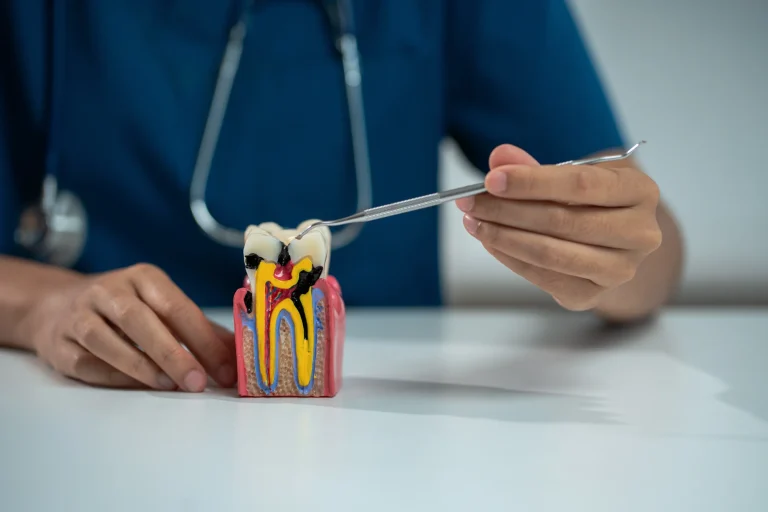
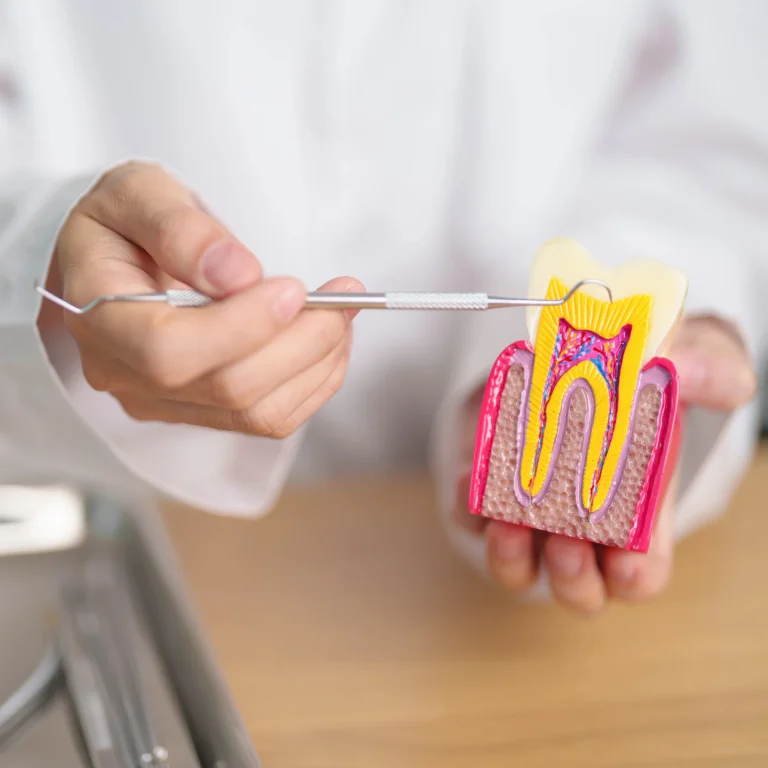
Inside every tooth is a small chamber of soft tissue called the pulp. The pulp contains the nerve and the blood vessels that kept the tooth alive while it was forming. When a deep cavity, a crack, repeated dental work, or trauma lets bacteria reach that chamber, the pulp becomes inflamed. If it stays inflamed long enough, it dies, and the infection moves down into the bone around the root tip.
Root canal therapy stops that process. Dr. Dalal numbs the tooth thoroughly, makes a small opening through the top, and removes the infected pulp from the chamber and the canals. The canals are cleaned, shaped, and disinfected, then filled with a sealing material so bacteria cannot return. In most cases the tooth is then closed with a temporary filling and scheduled for a crown, because a tooth that has had a root canal needs full coverage to hold up to years of chewing.
The procedure itself is quieter than its reputation. Modern anesthesia, magnification, and our CBCT 3D imaging let us see the root anatomy clearly before we start, which means fewer surprises during the appointment. Most patients are surprised that the visit feels closer to a long filling than to the dramatic experience they were braced for.
When a Tooth Needs Endodontic Care and When It Does Not
Not every aching tooth needs a root canal. Some sensitivity resolves on its own. A high filling can be adjusted. A small cavity can be treated before it reaches the nerve. Part of the reason we use OverJet AI assistance when reading your digital X-rays is to catch decay early, while a filling is still the right answer, and to flag the cases where the nerve is already involved.
Endodontic treatment becomes the right call when the pulp is irreversibly inflamed or already infected. The signs we look for include lingering sensitivity to temperature, pain that wakes you up at night, pain on biting, a pimple-like bump on the gum near a tooth root, or a dark area at the root tip on an X-ray. Sometimes a tooth is quietly dying without much pain at all, and the CBCT scan is what tells us a treatment is needed.
When a tooth is too far gone to save, we will tell you that honestly. In those cases we talk through tooth extractions and what comes next, whether that is a single tooth implant, a bridge, or simply leaving the space if the tooth was a wisdom tooth. The point is the same as with any recommendation Dr. Dalal makes: you should leave understanding why this tooth, why this treatment, and why now.
What Your Endodontic Visit at Cordova Family Dental Looks Like
Before we start, you get the full picture. Dr. Dalal will show you the digital X-ray and, when needed, the CBCT 3D image of the tooth on the monitor and point out what she is seeing: the depth of the decay, the shape of the canals, the area at the root tip. If a referral to an endodontic specialist makes more sense for a complex case (curved canals, a retreatment, a tooth with unusual anatomy), she will say so.
On treatment day, the tooth is numbed completely before anything begins. A small rubber sheet called a dental dam isolates the tooth and keeps the area clean and dry through the procedure. The infected tissue is removed, the canals are cleaned and shaped, and a sealing material is placed. Many single-canal teeth can be finished in one visit. Molars with multiple canals sometimes take two appointments so the tooth can settle between steps.
Once the root canal is complete, the tooth needs a final restoration to protect it. In most cases that means a crown, and our intraoral scanner lets us take the impression digitally rather than with traditional impression material. We will walk you through the timing, the cost of the crown, and what to expect during the few weeks between the root canal and the final crown so nothing comes as a surprise.
Insurance, TennCare, and Paying for a Root Canal
Root canal therapy is one of the more commonly covered procedures in dental insurance, often under the major or basic services category depending on your plan. Cordova Family Dental is in network with most PPO dental plans carried by Memphis-area employers, and we are now accepting TennCare as well. Before we schedule treatment, our front desk will run your benefits and give you a written estimate of what insurance is expected to pay and what your out-of-pocket portion will be.
For the part insurance does not cover, we offer CareCredit financing so the cost can be spread across monthly payments rather than paid all at once. You can read more on our payment options page at home before you ever call. If a tooth is causing enough pain that you are considering an extraction purely for cost reasons, tell us. There is almost always a way to make saving the tooth work.
Why Saving a Tooth With Root Canal Therapy Is Worth It
A natural tooth that has been treated endodontically and restored with a crown can last for decades with normal brushing, flossing, and regular checkups. It keeps the bone around the root stimulated, holds your bite in place, and chews the way your mouth is used to chewing. Outc.webpomes vary based on the health of the surrounding bone, the quality of the final restoration, and your home care, but a well-treated tooth often outlives the worry that brought you in.
The alternative to a root canal is usually extraction followed by replacement. That can be the right choice in some cases, but it is almost always more involved and more expensive over the long run than treating the tooth you already have. When the tooth is restorable, endodontic care is the conservative answer.
If a tooth has been bothering you, do not wait it out hoping the ache fades. Pain that comes from inside a tooth tends to get louder, not quieter. Catching it early often means a simpler treatment and a better outc.webpome.
Talk to Dr. Dalal About the Tooth That Is Bothering You
Call Cordova Family Dental to schedule an evaluation. We will take the X-rays, show you what is happening inside the tooth, and walk you through your options before any treatment begins.