
Invisalign vs Braces in Cordova, TN
Two ways to move teeth, two different daily experiences, and one decision that should fit your mouth and your schedule. Here is how Dr. Dalal walks Cordova families through the choice.
Choosing Between Clear Aligners and Brackets at a Neighborhood Practice
Most patients who come in asking about Invisalign vs Braces in Cordova TN already know the basics. Aligners are clear and removable. Braces are fixed to the teeth with brackets and wires. What they want from Dr. Dalal is the part the marketing pages skip: which one is actually going to work for the bite they have, the life they live, and the budget they can plan around.
Cordova Family Dental offers both options in-house with orthobrain clinical support, so the conversation does not start with a referral across town. It starts with a CBCT scan, an intraoral scan, and a plain-language explanation of what your teeth are doing right now and what each treatment would change.
This page walks through how the two methods actually move teeth, who tends to do well with each, what a course of treatment looks like inside our office, and how insurance and financing fit in. Read it at home. Bring your questions in.
How Invisalign Moves Teeth Compared to Traditional Braces
Braces use brackets bonded to each tooth and an archwire that the body of the wire wants to return to its original shape. As the wire straightens, it carries the teeth with it. Dr. Dalal adjusts the wire, swaps elastics, and uses auxiliary attachments to control rotation, tipping, and root position. The force is continuous because the appliance never comes off until the case is finished.
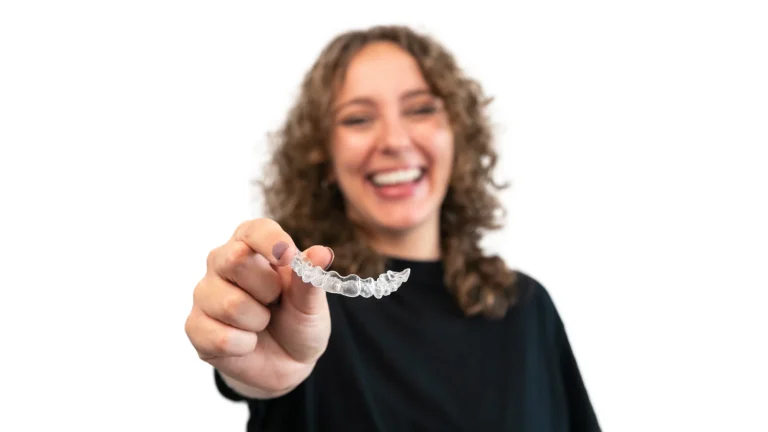
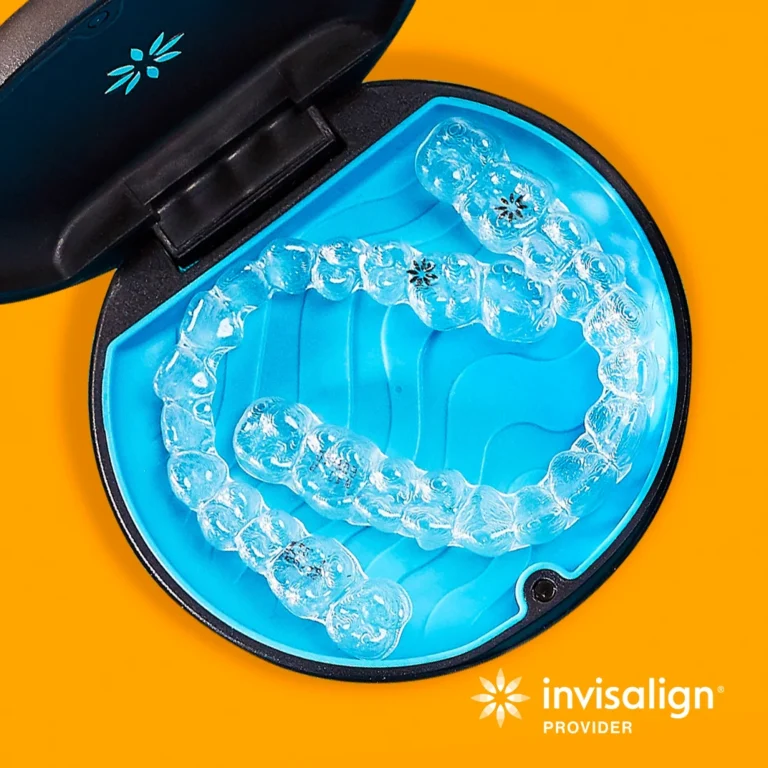
Invisalign uses a series of clear thermoplastic trays. Each tray is shaped slightly differently from the last, and when you snap it onto your teeth, it puts gentle pressure on specific spots. Small tooth-colored attachments are bonded to certain teeth to give the aligners something to grip, especially when a tooth needs to rotate or extrude. You wear each tray for one to two weeks, then move to the next.
Both systems rely on the same biology: steady, light pressure causes bone to remodel around the tooth so it can move into a new position. The difference is mostly in how the pressure is delivered and how visible the hardware is during the day. Some movements (significant rotations of round teeth, big vertical changes) are still easier with brackets. Many crowding, spacing, and mild-to-moderate bite cases handle very well with aligners.
Who Tends to Do Well with Invisalign and Who Is a Better Fit for Braces
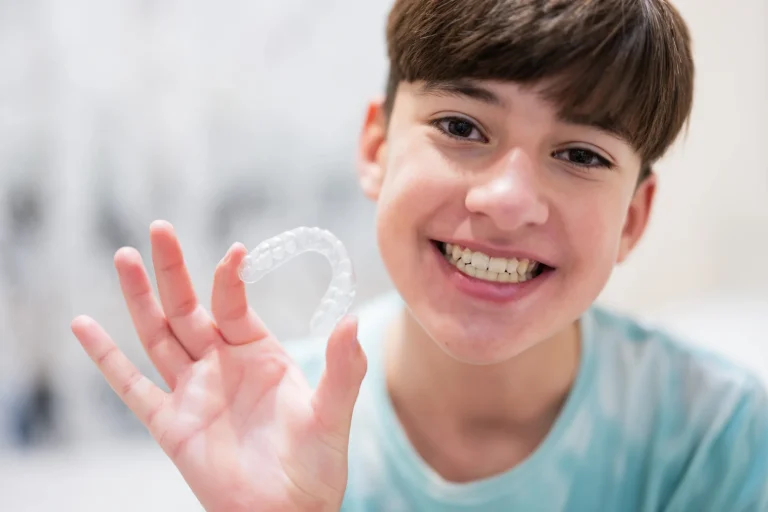
Adults and older teens who can be trusted to wear aligners 20 to 22 hours a day are usually strong Invisalign candidates. If you have a job where speaking clearly matters, a wedding on the calendar, or you simply do not want metal showing in photos for the next year and a half, the clear trays remove a real daily friction. They also come out for meals, which makes flossing and brushing the same as it was before treatment.
Braces tend to be the better call for younger patients who lose things, for cases with severe crowding or complex bite correction, and for anyone who knows themselves well enough to admit the trays will live in a drawer instead of in their mouth. Compliance is the quiet variable in every orthodontic case. Aligners only work when they are on the teeth.
Dr. Dalal will not push you toward one or the other based on what sounds nicer. After the scan and exam, she will show you the model of your teeth, point to the specific movements your case needs, and tell you honestly which appliance handles those movements more predictably. If your case sits in the gray zone between the two, you will hear that too.
What a Course of Invisalign or Braces Looks Like at Cordova Family Dental
Every orthodontic case at our office starts the same way: digital X-rays, a CBCT 3D scan if the case calls for it, photos, and an intraoral scan with our wand. No traditional impression material. The records go to orthobrain for clinical planning support, and Dr. Dalal reviews the proposed tooth movements before anything is presented to you.
For Invisalign, you receive a series of trays and a schedule. Most patients come in every 8 to 10 weeks for a quick progress check. Attachments are placed at the start and removed at the end. Total treatment time for typical cases runs roughly 6 to 18 months, though shorter and longer plans exist depending on what your teeth need to do.
For braces, brackets are bonded in a single appointment and you return roughly every 4 to 6 weeks for adjustments. Treatment time is usually 12 to 24 months. Either way, the case is not over when the appliance comes off. Retainers hold the result, and we will go over retainer wear before the final tray or the bracket removal appointment so nothing about the finish is a surprise.
If you want to compare the two options against your actual mouth, our pages on Invisalign in Cordova TN and the broader orthodontics in cordova tn overview go deeper into each.
Insurance, Financing, and What You Will Actually Pay for Orthodontic Treatment
Many of our Cordova, Bartlett, and Germantown patients carry PPO dental plans through a Memphis-area employer, and a good number of those plans include an orthodontic benefit, usually a lifetime maximum that applies to either Invisalign or braces. We will run your benefits before treatment starts and tell you what the plan is likely to cover and what is left for you. TennCare orthodontic coverage is more limited and is generally tied to medical necessity, so we will go over what applies to your specific situation in the consult.
For the portion that is not covered, CareCredit financing is available so you can spread the out-of-pocket cost across the length of treatment instead of paying all at once.
Why the Right Orthodontic Choice Matters Beyond Straight Teeth
Straight teeth photograph well, but the real reason Dr. Dalal cares about orthodontics is what a corrected bite does for the next thirty years of your mouth. Teeth that meet evenly wear evenly. Crowded teeth that finally have room to be cleaned tend to develop fewer cavities and less gum inflammation. A bite that is not grinding sideways on a single molar puts less strain on the jaw joint.
Whether you finish in clear trays or in brackets matters less than whether the case is planned well and finished completely. That is the part we hold ourselves to. The plan she builds for you is the plan that fits your mouth and your budget, not a script pulled off a shelf.
Talk Through Your Options with Dr. Dalal
Bring your questions about timeline, cost, and which appliance fits your life. We will scan, show you the images, and lay out both paths so you can decide with the full picture in front of you.